UEH Sustainable Finance Institute Strengthens Academic Presence at ELG 2026
As part of the ELG 2026 International Conference, themed "Systemic Sustainability: Analysis and Policy Design in the Age of Multiple Transitions," the UEH Sustainable Finance Institute (SFI) organized three thematic sessions addressing critical issues in sustainable transition, including ESG integration in corporations, technology for sustainability, and transition governance. In addition, four members of the Institute served as session chairs in parallel sessions, further expanding SFI's academic engagement throughout the conference.
The conference sessions provided an important platform for researchers, practitioners, and policymakers to exchange perspectives on emerging challenges associated with digital transformation, green transition, and economic restructuring in developing economies, including Vietnam.
Three Thematic Sessions Organized by SFI
ESG Integration in Corporates within Transitioning Economies
Session SFI-A, entitled "Integrating ESG in Corporates: Insights from Transitioning Economies," was chaired by Assoc. Prof. Bui Thi Mai Hoai, Dean of the UEH Sustainable Finance Institute.
The presentations in this session focused on practical approaches to embedding Environmental, Social, and Governance (ESG) considerations into corporate operations. A recurring theme was the need to move ESG beyond aspirational commitments toward governance systems that are measurable, verifiable, and accountable.
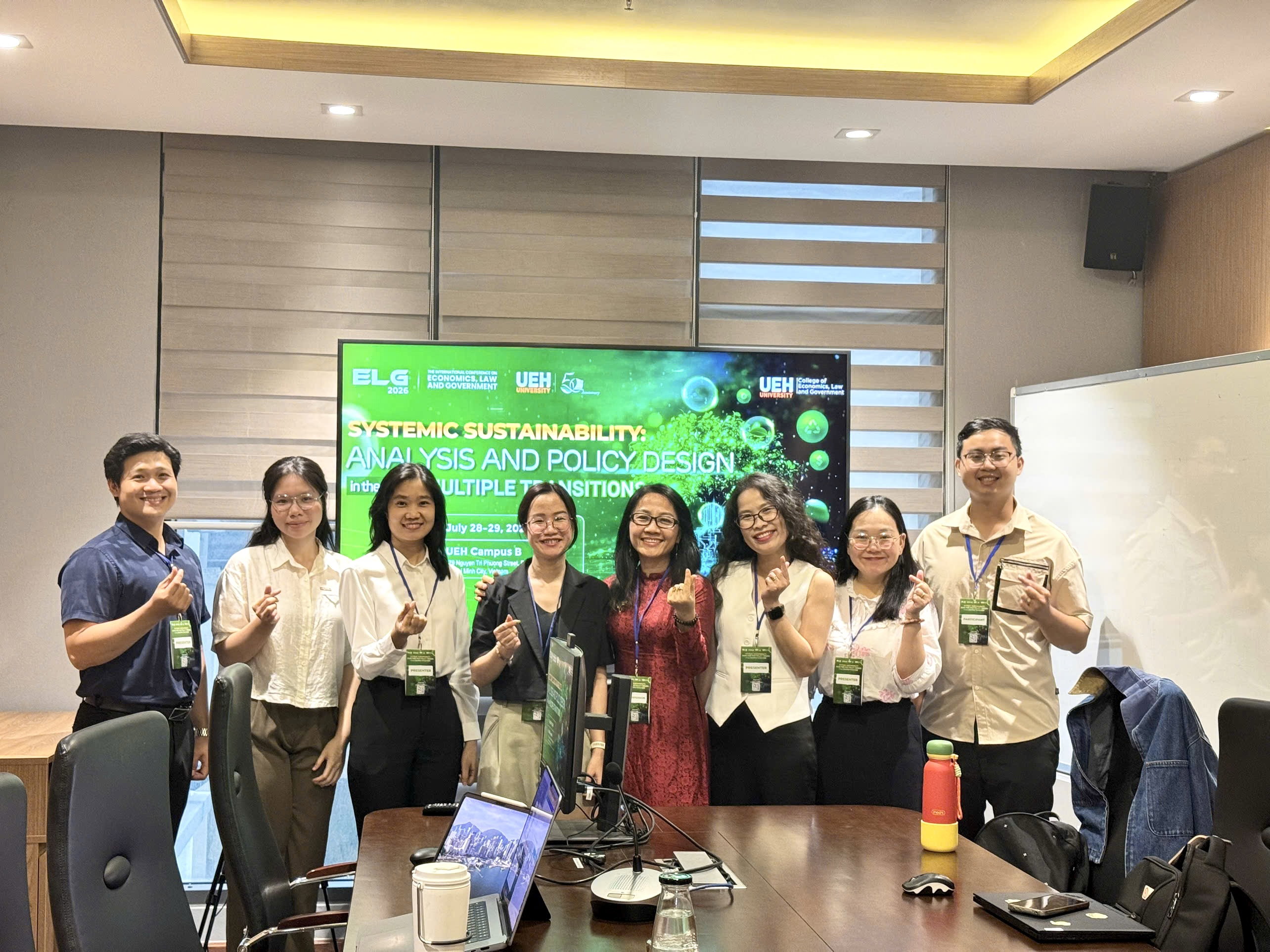
The session SFI-A “Integrating ESG in Corporates: Insights from Transitioning Economies” was chaired by Assoc. Prof. Bui Thi Mai Hoai
A case study on DHL Express Vietnam, presented by Dinh Thi Xuan Thuy and Bui Thi Mai Hoai, demonstrated that individual mindfulness and a green organizational culture play significant roles in shaping employees' environmental identity and promoting sustainable workplace behaviors.
At the organizational level, Nguyen Viet Hung and Duong Tuan Kiet proposed a four-layer analytical framework based on ISO 20121:2024, applying it to assess the non-profit organization CHOICE. The framework aims to narrow the gap between sustainability communication and operational practice while reducing the risk of “greenwashing”.
Huynh Hong San introduced an evaluation framework for biodegradable packaging based on the Triple Bottom Line model and life-cycle thinking. The findings highlight that biodegradable packaging does not automatically generate environmental benefits if waste collection and treatment systems are inadequate. Under certain landfill conditions, such packaging may even contribute to significant methane emissions.
Another emerging research direction was presented by Le Thi Hai and Le Huu Quynh Anh, who assessed biodiversity disclosure practices among 32 companies listed in the Top 100 Sustainable Businesses in Vietnam. Their study found that organizations are increasingly driven by both legitimacy pressures and nature-related risk management requirements under the Taskforce on Nature-related Financial Disclosures (TNFD) framework and GRI 304, particularly in the agriculture, energy, and natural resource sectors.
From the consumer perspective, Ngo Huu Khanh Linh and Ho Huynh Y Nhi analyzed survey data collected in Ho Chi Minh City. Their findings indicate that order fulfillment capability and platform efficiency are the primary determinants of customer satisfaction in fashion e-commerce. For consumers purchasing fashion products through online marketplaces, packaging was found to have relatively little influence on overall satisfaction.
Based on these research findings, Session SFI-A recommended developing industry-specific ESG indicator frameworks; strengthening the legal framework to prevent greenwashing; providing initial technical and financial support for small and medium-sized enterprises (SMEs) as well as social organizations in implementing ESG practices.
Technology, Water Resources, Biodiversity, and Nature-based Solutions
Session SFI-B, entitled “Technological Pathways to Environmental Sustainability: Decarbonization, Water, and Biodiversity”, was chaired by Assoc. Prof. Le Huu Quynh Anh of the UEH Sustainable Finance Institute.
The session featured research on digital technologies, green technologies, and nature-based solutions to address challenges related to water security, climate change, and biodiversity loss across Southeast Asia.

Assoc. Prof. Le Huu Quynh Anh chaired Session SFI-B, “Technological Pathways to Environmental Sustainability: Decarbonization, Water, and Biodiversity”
Research conducted in Chiang Rai, Thailand, and Phnom Penh, Cambodia, demonstrated that restoring river corridors, wetlands, and urban ecosystems can simultaneously reduce flooding, improve water quality, and enhance carbon sequestration. However, scaling up these initiatives depends on the availability of land, technical capacity, and sustainable financing mechanisms.
At the community level, a study on floating gardens in schools in Chiang Rai found that certain aquatic plant species can effectively absorb excess nutrients from water. The findings highlight the potential of low-cost, nature-based solutions for local water management.
For Vietnam, Le Huu Quynh Anh and colleagues applied the Water Evaluation and Planning (WEAP) model to assess water resource balance in Can Tho City through 2030. The study identified a potential shortage of water for industrial activities during the dry season and recommended strengthening backup water distribution networks while increasing the reuse of industrial water.
In the field of greenhouse gas mitigation, Le Huu Quynh Anh and Bui Thi Mai Hoai developed a greenhouse gas inventory model for a Vietnamese textile manufacturing plant. Their findings revealed that indirect emissions from grid electricity account for the largest share of total emissions, underscoring the need to improve energy efficiency, expand the use of renewable energy, and implement a clear decarbonization roadmap.
Governing Transitions Towards a Sustainable Future
Session SFI-C, entitled “Governing Transitions: Managing the Shift to a Sustainable Future”, was chaired by Dr. Pham Thai Binh, Vice Dean of the UEH Sustainable Finance Institute.
The session explored sustainable transitions through the lenses of data governance, industrial technologies, human resource management, and enterprise digital transformation.
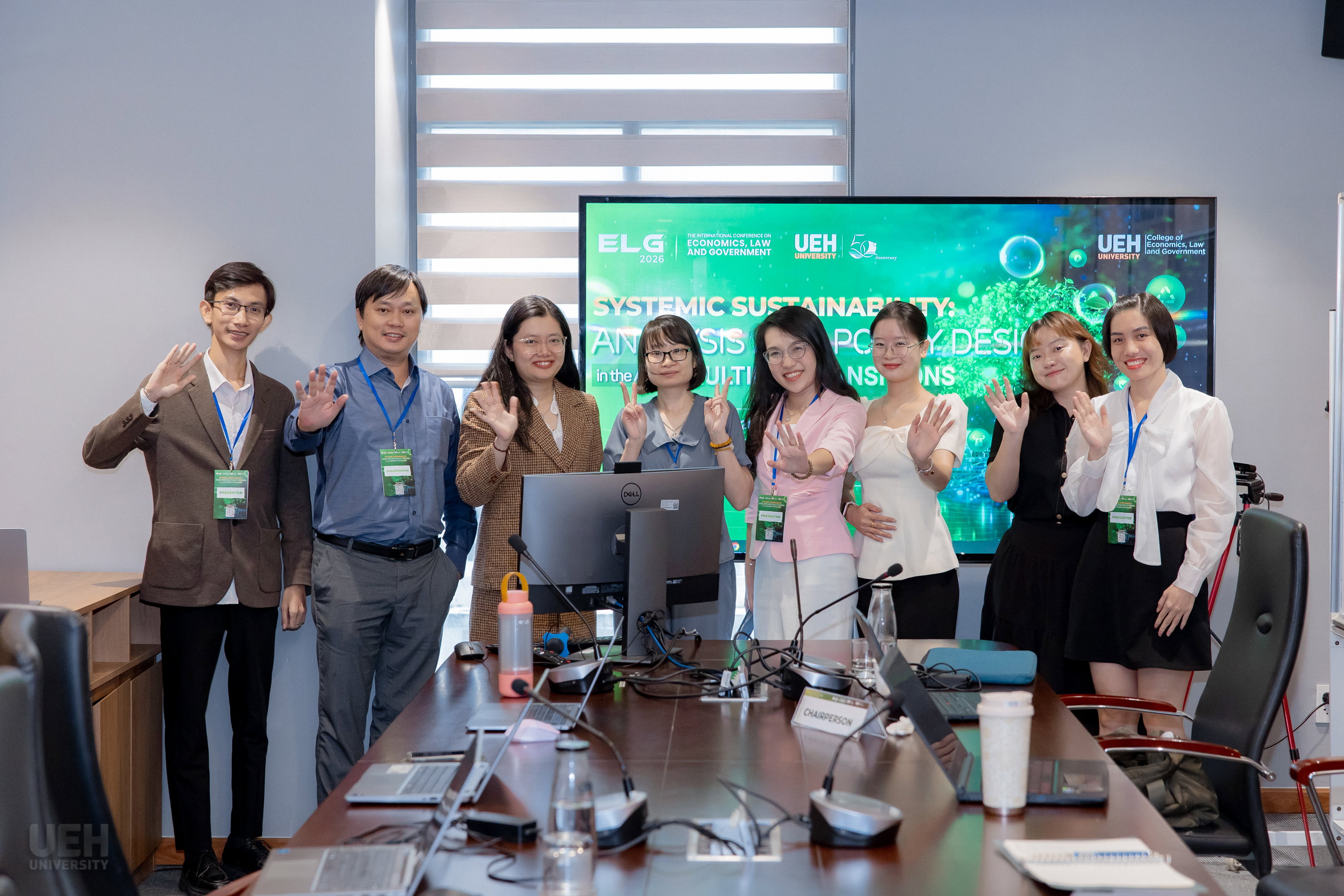
Session SFI-C, entitled "Governing Transitions: Managing the Shift to a Sustainable Future" was chaired by Dr. Pham Thai Binh, Vice Dean of the UEH Sustainable Finance Institute
Nguyen Thi Minh Giang presented a study examining the application of artificial intelligence (AI) in environmental management. The research highlighted that AI-driven environmental decision-making may produce biased outcomes when training data do not adequately represent local contexts. This challenge is particularly significant in developing economies, where environmental data systems often remain fragmented and lack standardization.
Bui Thi Thuy Hang evaluated the role of electrostatic powder coating technology in advancing the circular economy. The study emphasized its potential to reduce volatile organic compound (VOC) emissions, improve material recovery rates, and help businesses comply with increasingly stringent international environmental standards.
From a social perspective, Nguyen Cao Huynh Nhu and Luong Thi Thuy found that empowering leadership strengthens employees' psychological empowerment and enhances the intrinsic motivation of female workers.
Meanwhile, Nguyen Van Quy and Bui Thi Mai Hoai examined the implementation of the Digital Product Passport (DPP) in Vietnam's export-oriented textile and garment industry. Their findings suggest that businesses should proactively strengthen supply chain data infrastructure, traceability systems, and digital capabilities to meet emerging international market requirements.
SFI's Contributions Across Parallel Sessions
Beyond organizing the three thematic sessions, SFI members also served as chairs for four parallel sessions, broadening academic discussions on sustainable finance, public policy, regional development, corporate performance, and innovation.
ESG and Corporate Financial Performance. Session A11, chaired by Assoc. Prof. Bui Thi Mai Hoai, examined the relationship between ESG practices and corporate financial performance. Discussions covered capital structure and firm performance before and after the COVID-19 pandemic, the impact of corporate social responsibility (CSR) on green production and the global competitiveness of small and medium-sized enterprises (SMEs), as well as corporate financial resilience in the face of global risk shocks.
Public Investment and Fiscal Policy for Sustainable Development. Session A06, chaired by Dr. Pham Thai Binh, explored the role of public investment, information technology infrastructure, and institutional quality in driving economic growth. The session also discussed the fiscal and financial conditions required to achieve the Sustainable Development Goals (SDGs), urban infrastructure finance and public–private partnerships (PPPs), together with issues related to natural resource management, renewable energy, and green innovation.
Local Development and Institutional Networks. Session A04, chaired by Dr. Dinh Sy Khang, Program Director of the UEH-SFI Dual Degree Program in Sustainable Business and Environmental Management - Sustainable Transition Management (in partnership with the University of Koblenz, Germany), focused on policy design for the cultural heritage economy, the relationship between local enterprises, household income, and poverty reduction, the role of institutional networks in shaping public policy, and knowledge management in the public sector.
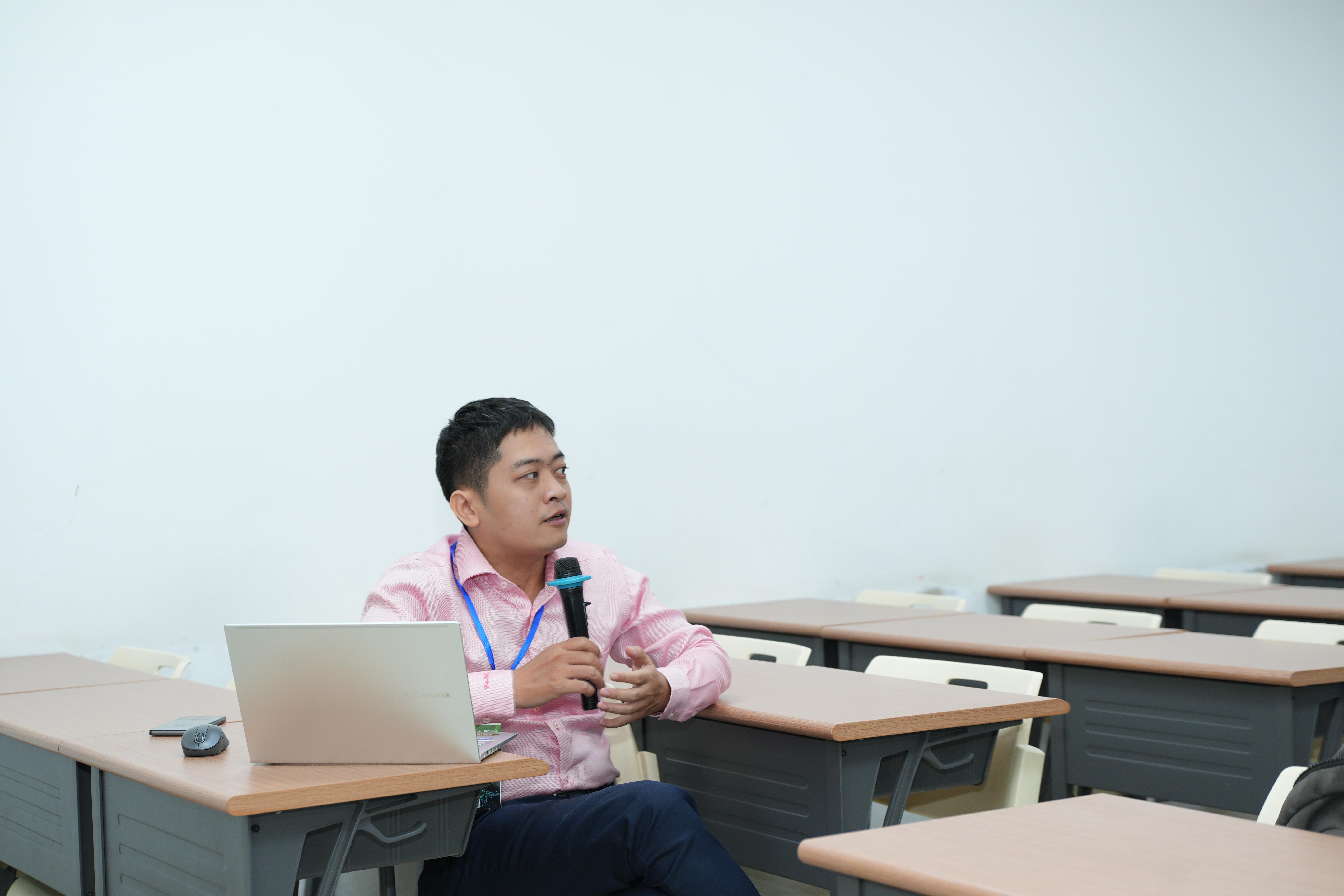
Dr. Dinh Sy Khang, SFI lecture, chaired the session “Local Development and Institutional Networks”
Innovation, Society, and Sustainable Transitions. Session B11, chaired by Assoc. Prof. Le Huu Quynh Anh, broadened the discussion to include the scaling up of grassroots innovation, legal issues surrounding trade secrets and business investment, the development of the silver economy in response to population ageing, and behavioral factors influencing reverse logistics and waste recycling.
Bridging Research, Policy, and Practice
The three thematic sessions and four parallel sessions organized and chaired by members of the UEH Sustainable Finance Institute (SFI) at ELG 2026 demonstrate the Institute's leadership in interdisciplinary knowledge and research on sustainable development. The topics - including ESG, environmental technologies, data governance, water resources, human resource management, fiscal policy, local development, and enterprise digital transformation - are closely interconnected and require integrated, multidisciplinary approaches.
Beyond generating academic insights, the studies presented also examined practical challenges and offered policy implications and actionable recommendations for strengthening institutions, standardizing data systems, enhancing enterprise capabilities, and developing financial mechanisms that support sustainable development.
Through its leadership of both thematic and parallel sessions, the UEH Sustainable Finance Institute continues to contribute to international academic exchange while fostering stronger connections between research, policymaking, and management practice. These activities also provide valuable opportunities for the Institute to expand research collaborations and knowledge-transfer initiatives in the fields of sustainable finance, ESG, environmental technologies, public policy, and transition governance.